Recykal Marketplace - Seller
Role :
UX/UI Designer (End-to-End Product Design)
Team :
UX Designer, UX Lead, Product Manager, 2 Developers, 1 QA Analyst
Tools
Figma, Notion, Google Meet
Year :
2024
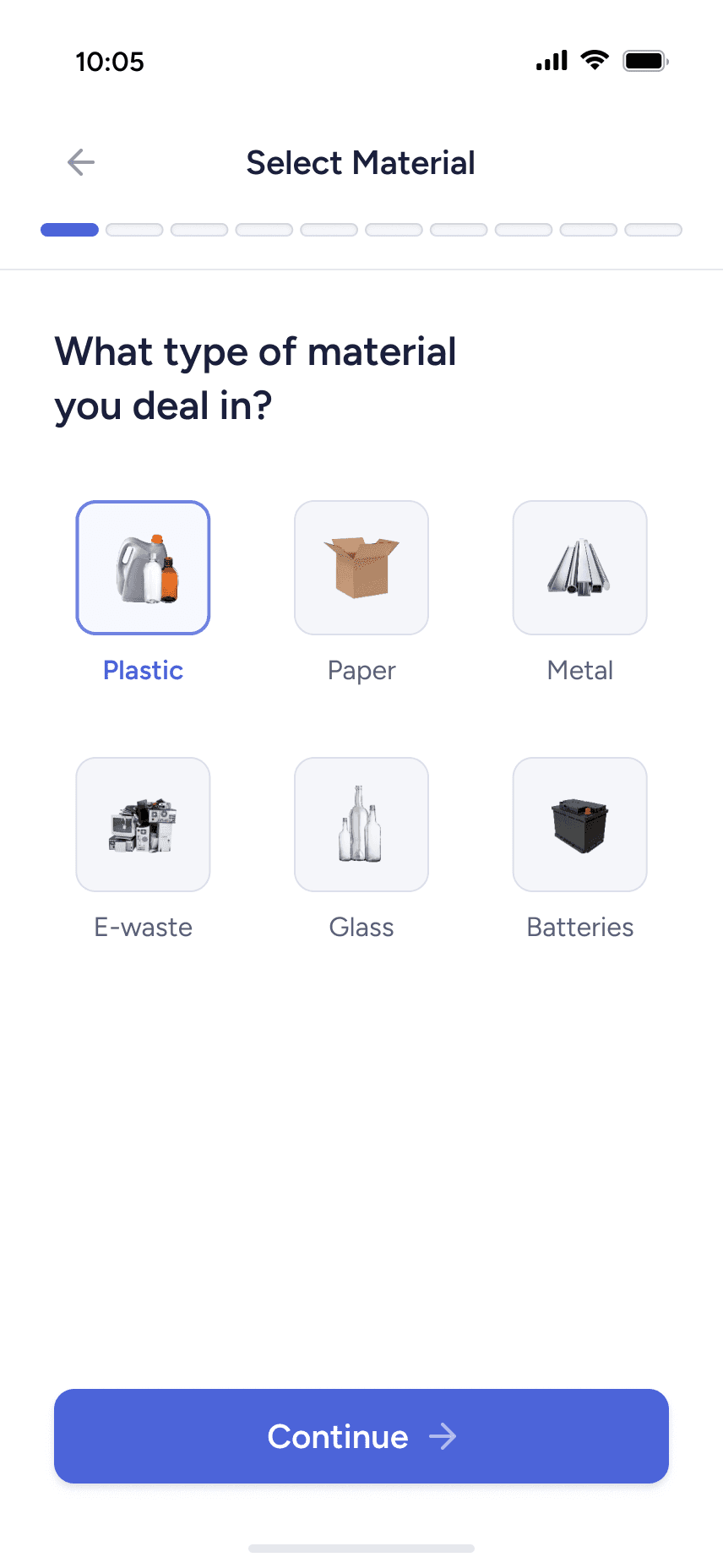
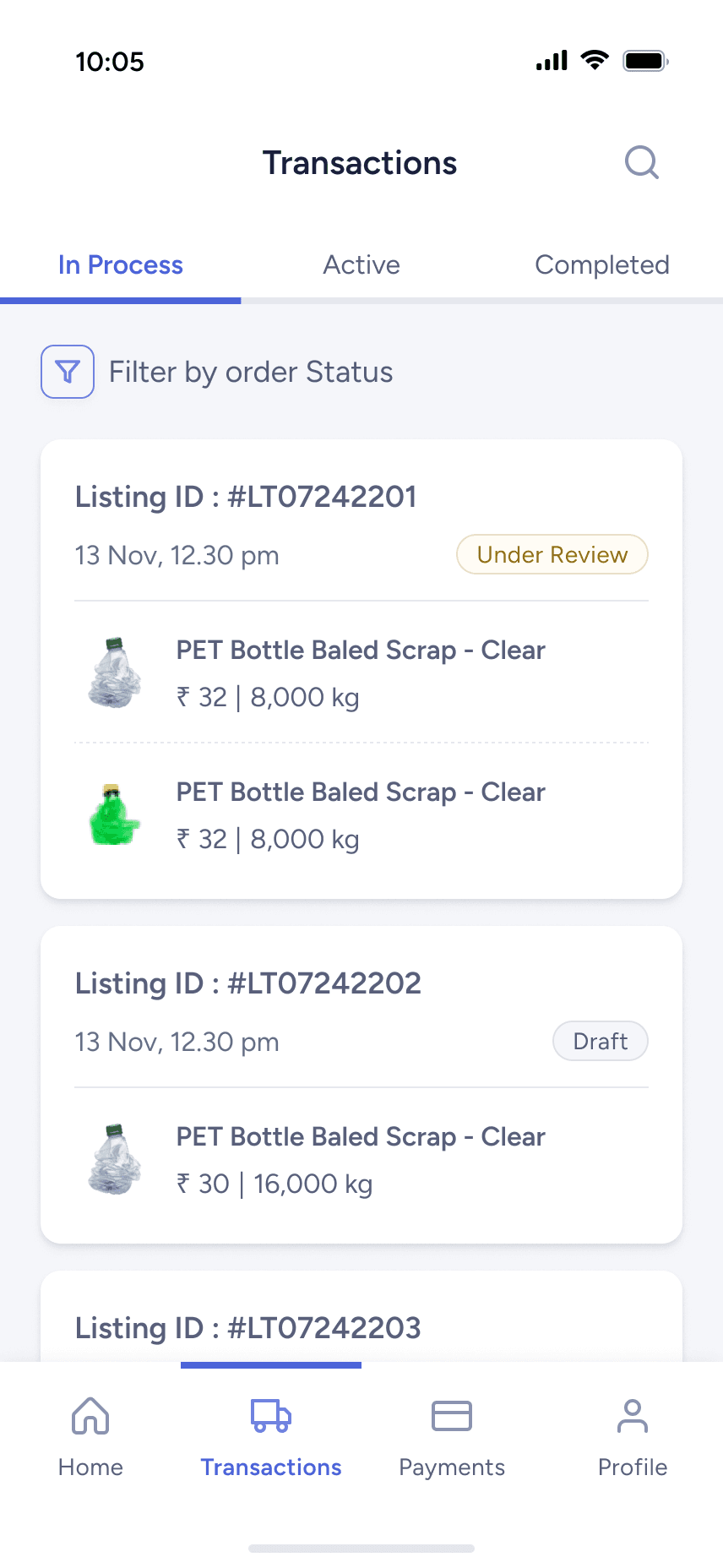

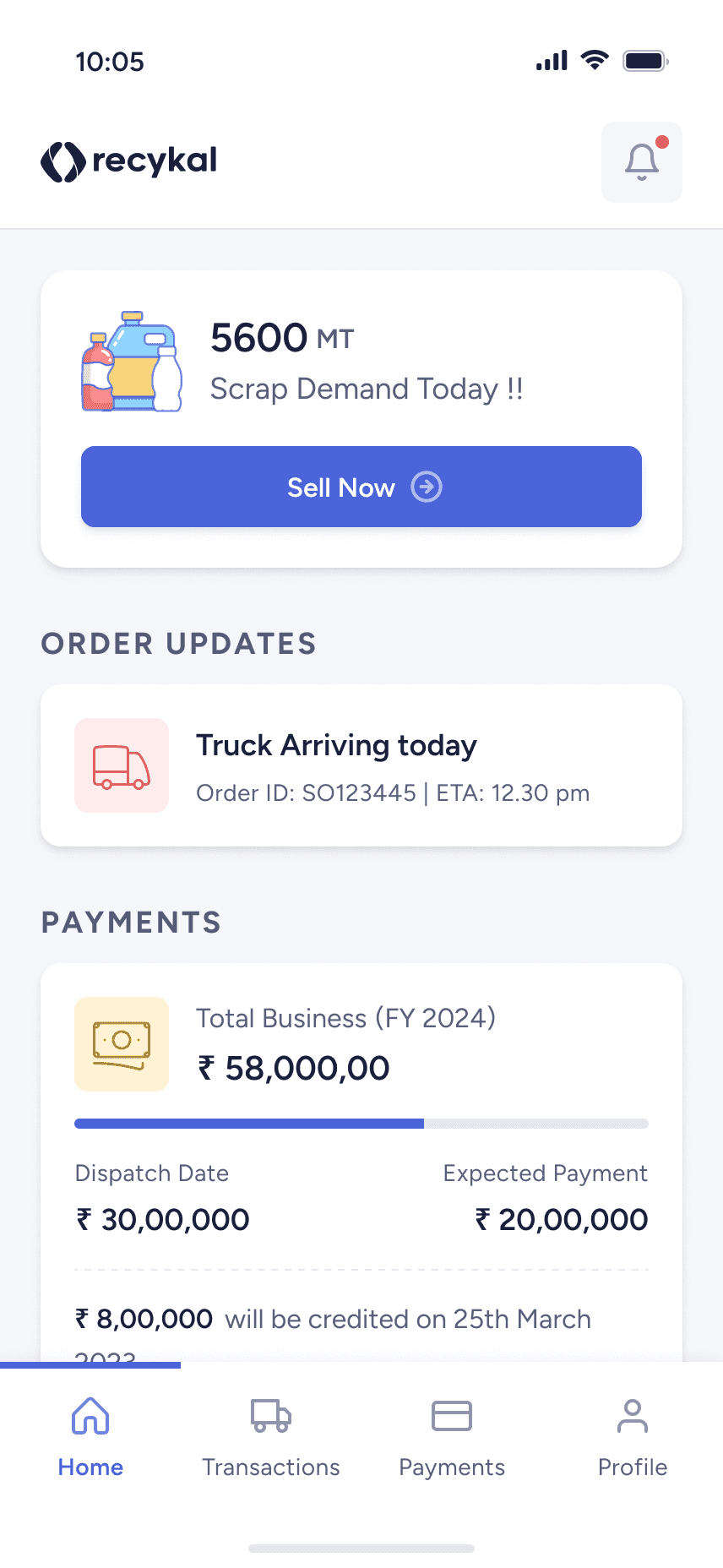
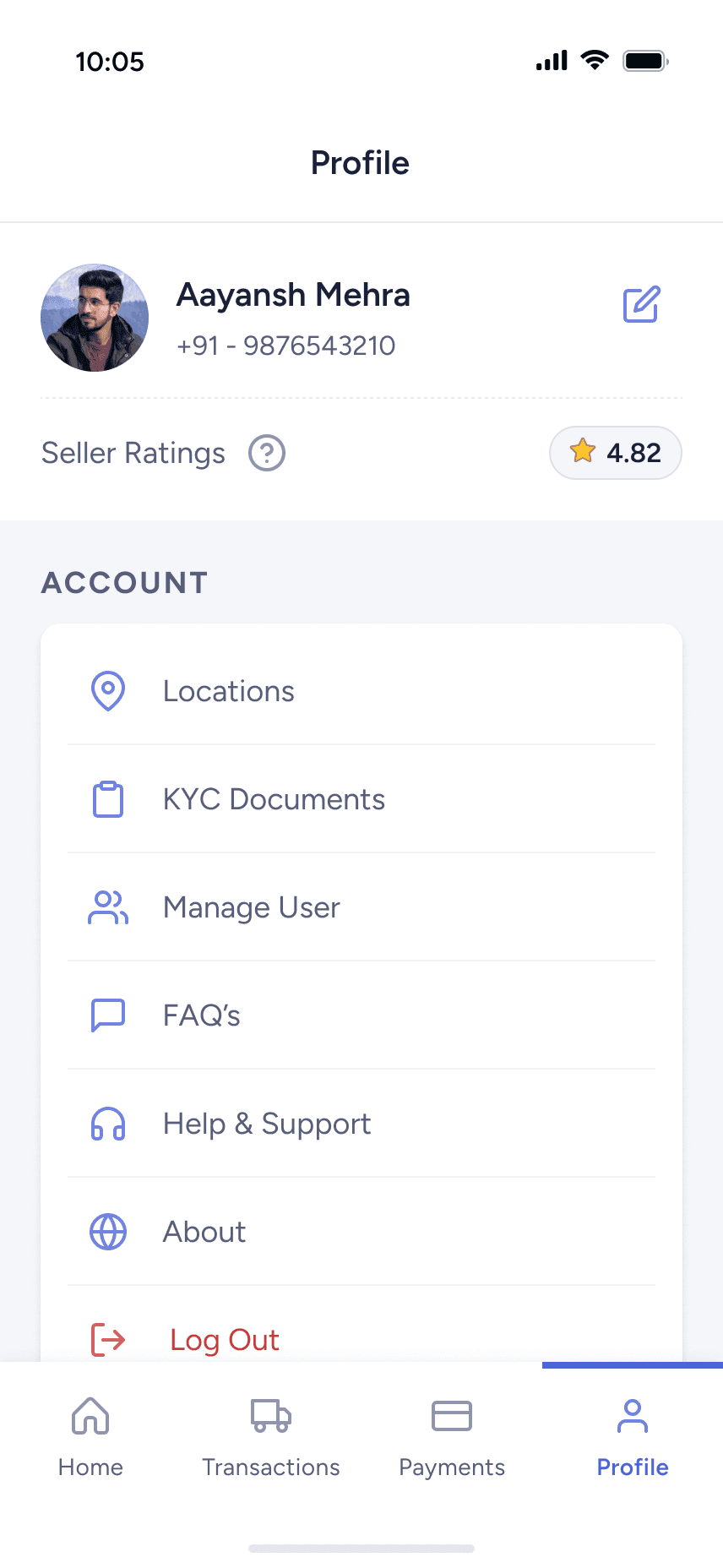

Overview
The Deposit Refund Scheme (DRS) encourages recycling by attaching a refundable deposit to beverage containers. When consumers return used bottles through Reverse Vending Machines (RVMs) or Soundboxes, they receive their deposit back. This initiative reduces waste and promotes responsible disposal.
Active Buyers
Recyclers and refurbishers across India
Material Types
Plastic, metal, paper, and e-waste
It connects seamlessly with Recykal’s internal operations system and buyer platform, ensuring transparency and efficient data flow.
Context & Problem
Key Challenges
Recykal Marketplace connects sellers, buyers, and internal teams to facilitate recyclable material transactions. While the ecosystem worked, it suffered from fragmented workflows and manual inefficiencies across both user groups.
Seller-Level Challenges
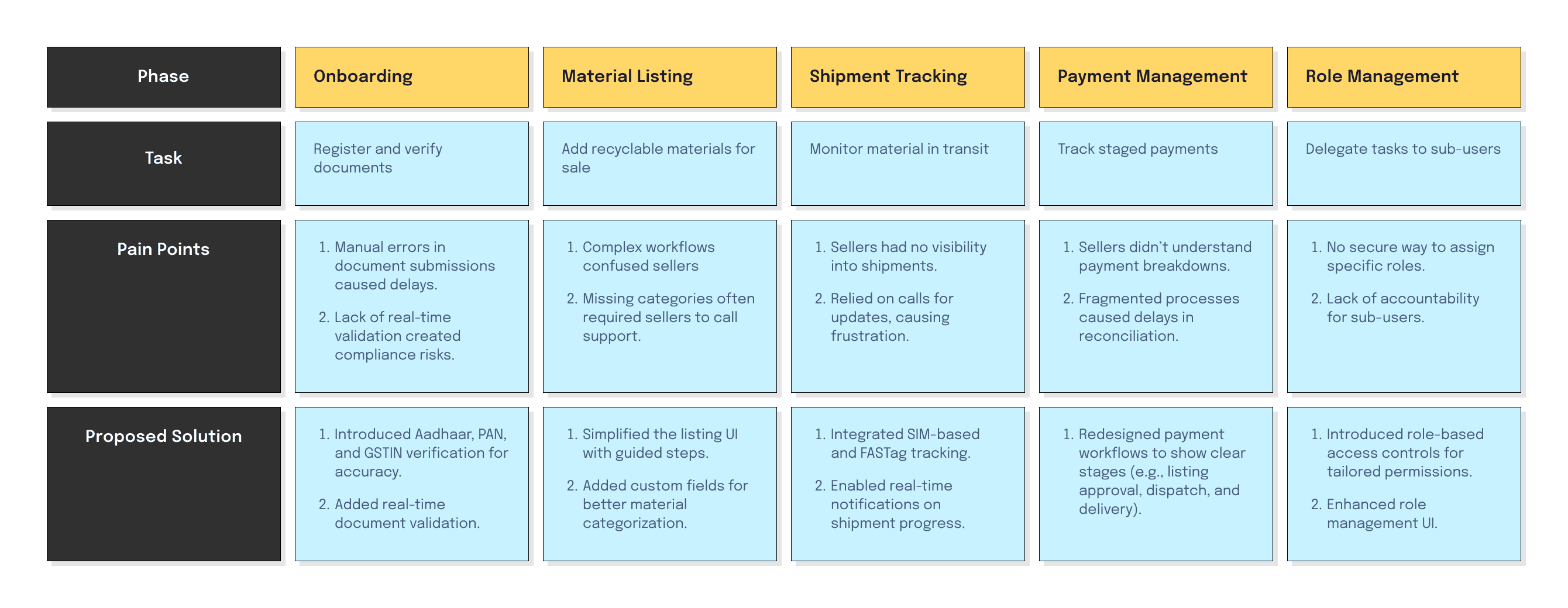
Sellers managed operations through WhatsApp, Excel, and calls, leading to confusion, errors, and scattered data.
Listings lacked structure — critical details like category, type, and condition were often missing.
Uploading compliance documents was confusing, causing frequent rejections and delays.
Sellers had no visibility into shipments or payments, relying on constant follow-ups.
Internal-Team Challenges
The operations team manually verified every seller and listing, slowing approvals.
No defined verification process led to unreliable or unauthorized sellers entering the system.
The internal portal was not fully integrated with the seller app, requiring repeated manual updates.
Coordination relied heavily on calls and messages, creating communication gaps and inefficiency.
Goal & Objective
To create a complete seller ecosystem from the ground up — enabling recyclers to onboard easily, list products confidently, track shipments, and manage payments with transparency.
Simplify Processes
Guide users through onboarding and listing creation with clear, step-by-step flows
Increase Transparency
Provide real-time visibility into shipment and payment status
Standardise Data
Ensure accurate data entry for reliable aggregation and verification
Unify Workflows
Integrate seller and internal reviewer workflows into one connected ecosystemion for new sellers
Reduce Manual Work
Implement automation and role-based access to streamline operations
Design Process
Once the challenges were clear, we followed a human-centred, iterative design process that moved from discovery to delivery with continuous feedback from real users.
Research and Discovery
Understanding seller workflows, pain points, and needs through interviews and observations
Define and Map
Synthesising insights into problem statements, personas, and current journey maps
Ideation and Exploration
Brainstorming possible solutions and visualising early concepts through sketches and flows
Designs and Prototype
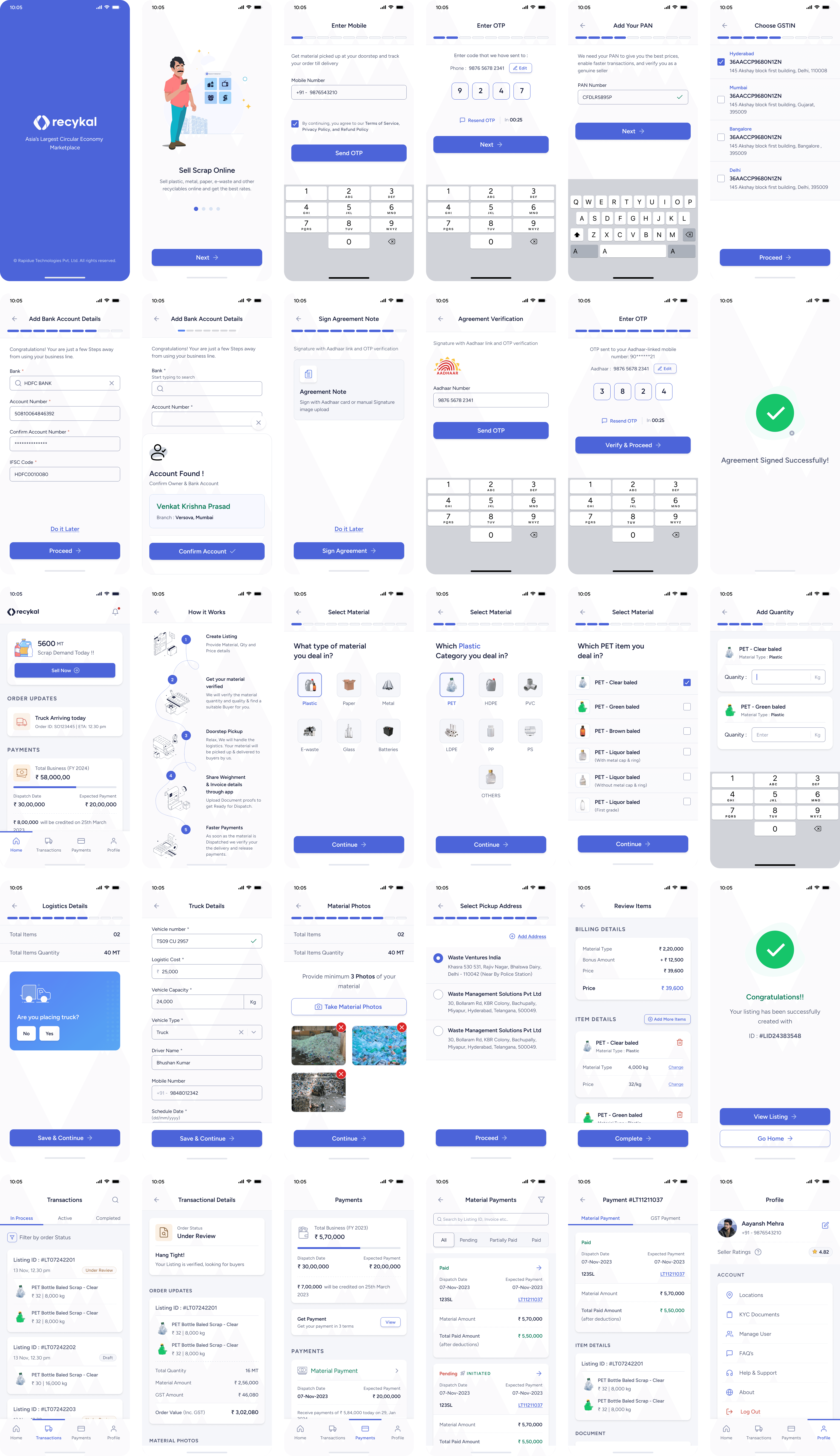
Creating high-fidelity screens and interactive prototypes representing real user journeys
Test and Iterate
Conducting usability tests with sellers, refining interactions, and improving clarity
Deliver and Collaborate
Finalising UI assets, documenting flows, and collaborating with developers for smooth handoff
Few clicks from research and brainstorming sessions
(Credits: Recykal)




Research & Analysis Approach
User Personas

Rajesh Kumar, 46
Recycling Business Owner
Background :
Owns a mid-sized recycling business dealing with bulk scrap sales.
Goals :
List materials easily, track orders, get paid on time, and ensure regulatory compliance.
Pain Points :
No visibility of shipment progress.
Payment breakdown unclear.
Struggles with documentation for compliance.
Needs :
Transparent payments stages, shipment tracking, faster onboarding, and compliance support.

Anjali Verma, 34
E-Waste Collection Manager
Background :
Owns a mid-sized recycling business dealing with bulk scrap sales.
Goals :
List materials easily, track orders, get paid on time, and ensure regulatory compliance.
Pain Points :
No role management features.
Difficulty in payment reconciliation due to fragmented payouts.
Poor visibility into team activities.
Needs :
Role-based access, real-time tracking, and improved payment clarity.
Approach to Understanding the Problem
To gain clarity on the challenges, I conducted the following research methods:
User Interviews
Conducted virtual interviews with sellers to understand their daily challenges and workflow frustrations with the current app.
Stakeholder Collabration
Engaged with product managers, sales teams, and operations department to identify business pain points and strategic priorities.
Workflow Mapping
Analyzed how documents, payments, and communication currently flowed between sellers, buyers, and marketplace teams.
Pain Point with Beta Version
Trust & Compliance Issues
Inadequate seller validation led to compliance risks and reduced trust in the system.
Payment Confusion
Fragmented payment workflows caused misunderstandings and financial planning issues.
Operational Bottlenecks
Manual truck placement and document collection slowed down processes.
Limited Visibility
Sellers lacked real-time shipment tracking, leading to frequent follow-ups.
Role Management
Absence of access controls caused inefficiencies in task delegation.
Inconsistent UI
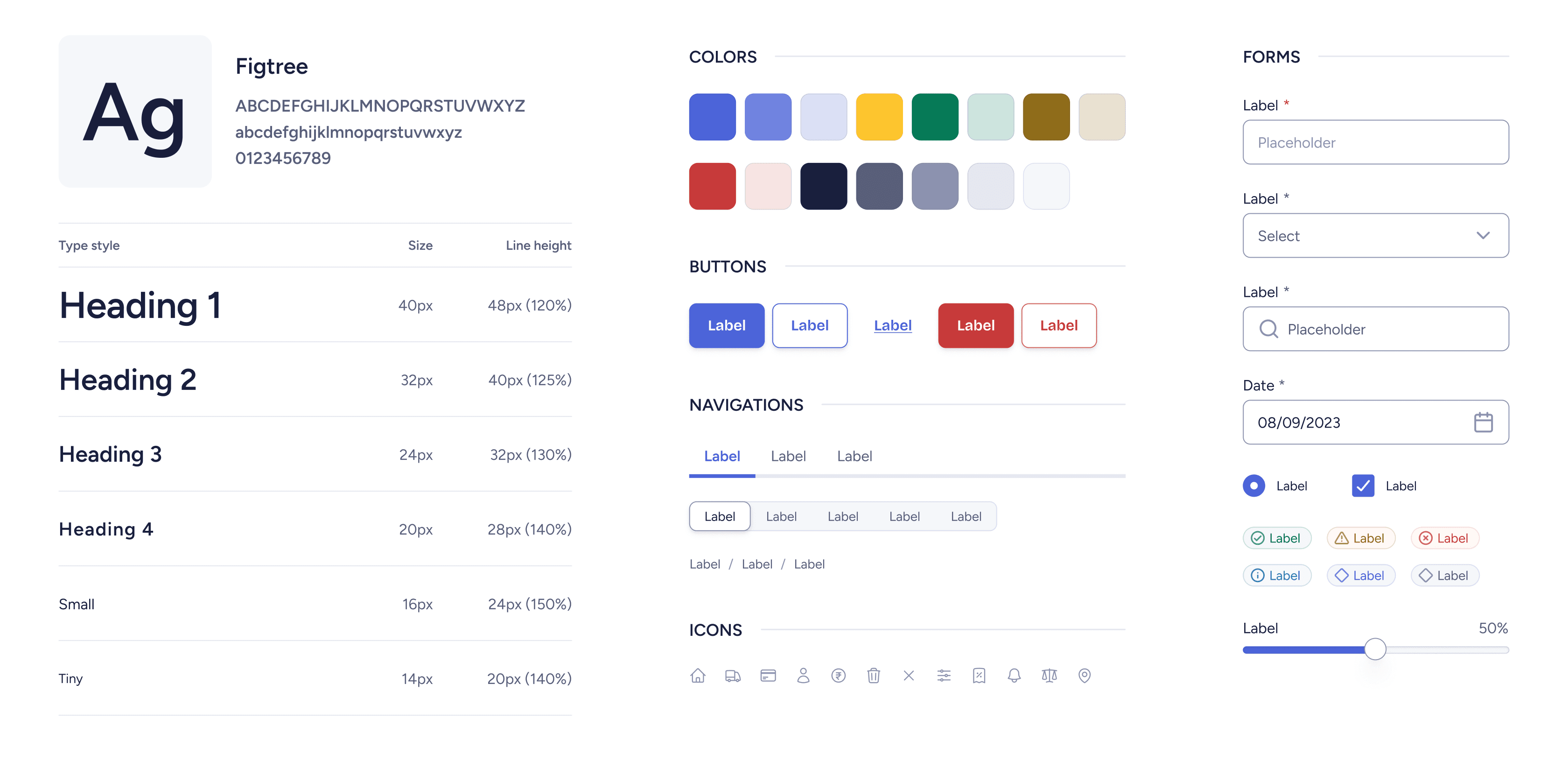
Poor navigation and design inconsistencies made tasks harder to complete.
Key Findings
Lack of Clarity in Documentation and Listings
Sellers were unsure about what documents and details were required for each listing, often leading to incomplete or incorrect submissions.
Unstructured Listing Data
Material listings lacked standard fields like category, type, and condition, which caused mismatches when connecting sellers with buyers.
Inconsistent Payment and Shipment Updates
There was no unified system to track shipment or payment progress, forcing sellers to rely on manual communication and follow-ups.
Heavy Manual Verification by Internal Teams
Internal teams spent several hours validating listings and correcting errors, slowing down approvals and reducing operational efficiency.
Key Insight
Sellers needed one transparent platform where they could create structured listings, upload documents accurately, track every shipment, and receive payment updates seamlessly — all in one place.
"I always call someone to know if my payment is done. There's no way to check myself."
-Seller from Maharashtra
Ideation and Exploration
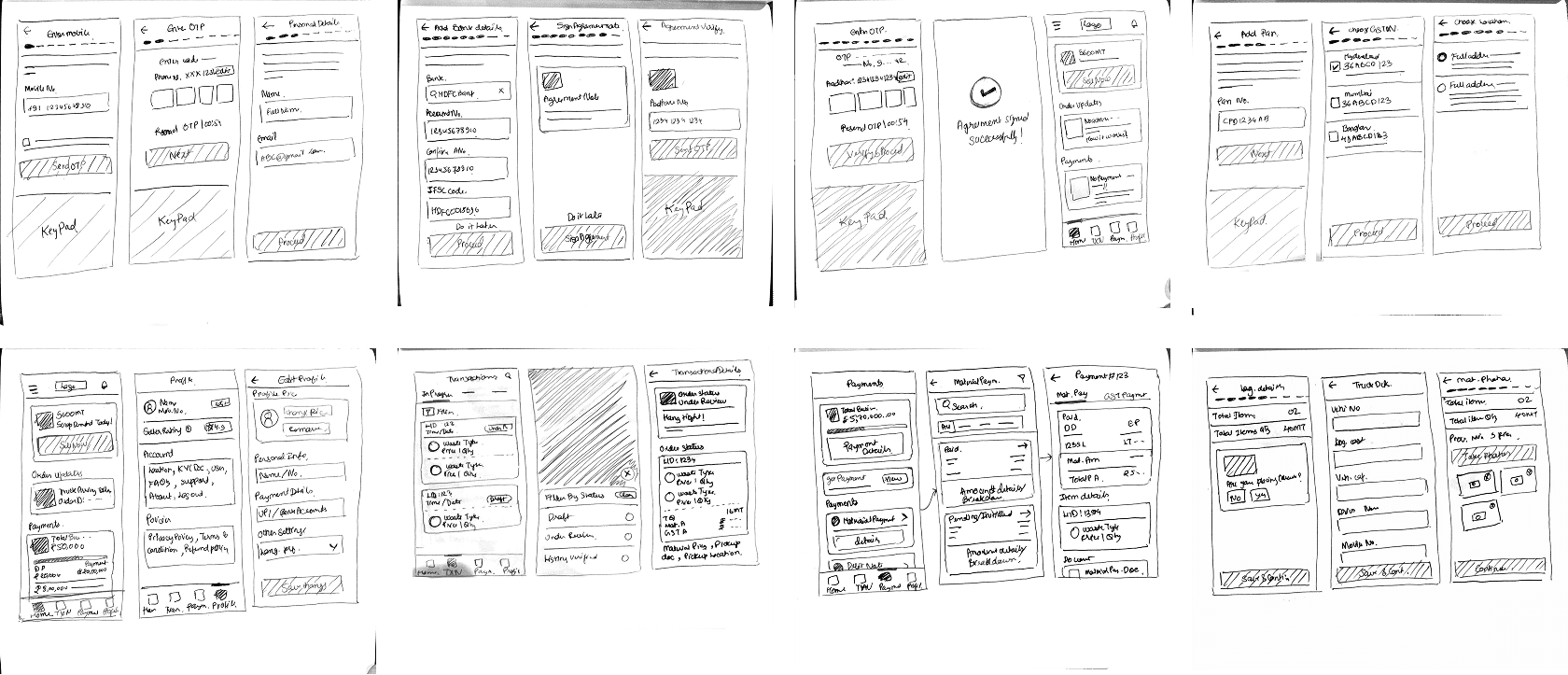
We mapped the complete seller journey from initial onboarding through to final payment receipt and identified specific friction points at each critical stage. Early sketches, wireframes, and flow diagrams were collaboratively tested with actual sellers to refine navigation patterns and improve overall clarity.
How I approached Problem Solving ?
Workshops & Collaboration
Conducted virtual interviews with sellers to understand their daily challenges and workflow frustrations with the current app.
Impact :
Ensured a wide perspective on solutions and team alignment on key priorities
Storyboard Creation
Mapped user workflows to identify gaps in the seller app
Impact :
Highlighted friction points, enabling workflow redesign for clarity and ease of use
Impact vs. Effort Analysis
Prioritized features based on business impact and feasibility
Impact :
High-impact, low-effort solutions like a rating system and staged payments were prioritized
Journey Map
Wireframes
Final Screens
Design System
Testing and Validation
A functional interactive prototype was rigorously tested with 15 sellers across different regions and business sizes. Feedback sessions centred on clarity of information, speed of task completion, and confidence in the platform.
Testing Method
Task-Based Testing
Sellers completed onboarding and created listings
Think-Aloud Sessions
Observed how users navigated and shared feedback
Post-Task Interviews
Gathered reflections on clarity and efficiency
Key Insight
Testing confirmed that the new Seller App was intuitive, scalable, and trustworthy, helping sellers manage their full journey independently whilst streamlining internal operations.
"Now I can upload everything correctly the first time and just wait for the approval."
-Seller from Maharashtra
Impact and Results
The Recykal Marketplace Seller App delivered measurable improvements across multiple dimensions, from user adoption to operational efficiency. The platform successfully transformed fragmented workflows into a unified, transparent system.
Key Metrics
Active Sellers Onboarded
Faster Verification
Fewer Compliance Errors
Better Communication
Business Impact
Operational Efficiency
Reduced manual verification workload by 40%
Decreased support ticket volume by 55%
Improved data accuracy and consistencyEnabled scalable growth without proportional team expansion
Enabled scalable growth without proportional team expansion
User Satisfaction
Increased seller trust and engagement
Reduced onboarding abandonment rate
Improved payment transparency and confidence
Enhanced marketplace reputation
Conclusion
Key Learnings
Balancing Complexity
Balancing simplicity for sellers and control for internal teams was crucial. The solution needed to be intuitive for first-time users whilst providing
Early Collaboration
Early collaboration with the operations team helped refine real-world workflows. Their insights were invaluable in identifying edge cases and validation requirements.
Transparency Builds Trust
Transparency and guided flows improved user trust and engagement significantly. Clear communication at every step reduced anxiety and support queries.
Scope of Improvements
Automated Fraud Detection
Introduce machine learning algorithms to identify and flag unreliable sellers based on behaviour patterns.
Performance Analytics
Add comprehensive analytics dashboards for internal efficiency tracking and decision-making.
Mobile Access for Reviewers
Extend mobile access for internal reviewers to approve listings and verify documents on the go.
Final Reflection
The Recykal Marketplace Seller App transformed a disconnected, manual system into a connected, transparent, and scalable digital platform. It empowered sellers to manage their operations independently while enabling internal teams to work faster, smarter, and with greater accuracy. By deeply understanding the needs of both sellers and internal stakeholders, this project demonstrated the power of user centred design in solving complex operational challenges and established a strong foundation for long term growth.
Confidentiality Note
Certain design flows and key screens are omitted due to confidentiality. Detailed walkthroughs can be shared privately.