DRS - Partner App
An operational platform within the DRS ecosystem designed to help collection agents manage device health, manual returns, earnings tracking, and pickup coordination efficiently in real-world conditions.
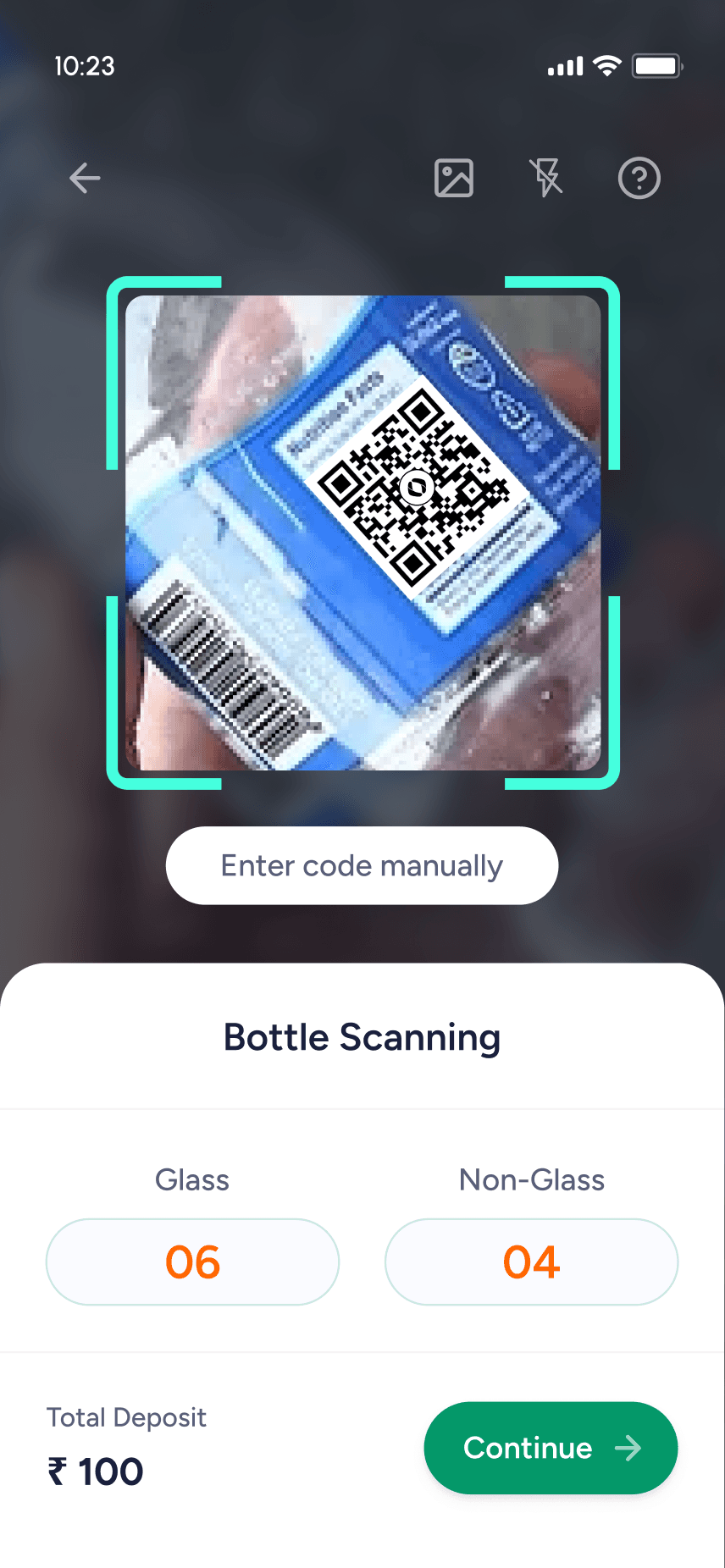

Key Impact
1,60,000+ Bottles Recycled
Ensured bottles were returned and processed instead of ending in landfills.
70–80% Less Friction
Simplified operations by replacing fragmented, manual workflows.
Better Partner Experience
Made day-to-day tasks clearer, faster, and more reliable for collection agents.
Transparent Earnings
Gave collection agents real-time visibility into their incentives and payouts.
Project Context
// What is the Deposit Refund Scheme ?
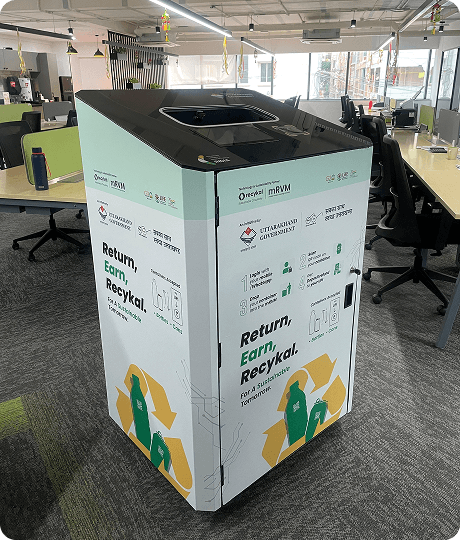
The Deposit Refund Scheme (DRS) encourages recycling by attaching a refundable deposit to beverage containers. When consumers return used bottles through Reverse Vending Machines (RVMs) or Soundboxes, they receive their deposit back. This initiative reduces waste and promotes responsible disposal.
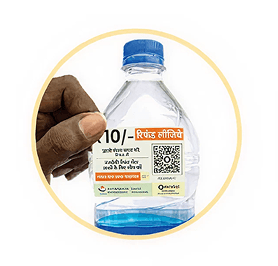
Buy

Use
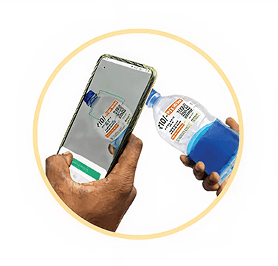
Return

Get Refund
First Pilot Location
Kedarnath Temple trek, Uttarakhand
Partners
Uttarakhand Government and Recykal
// Machines used for Item Collections
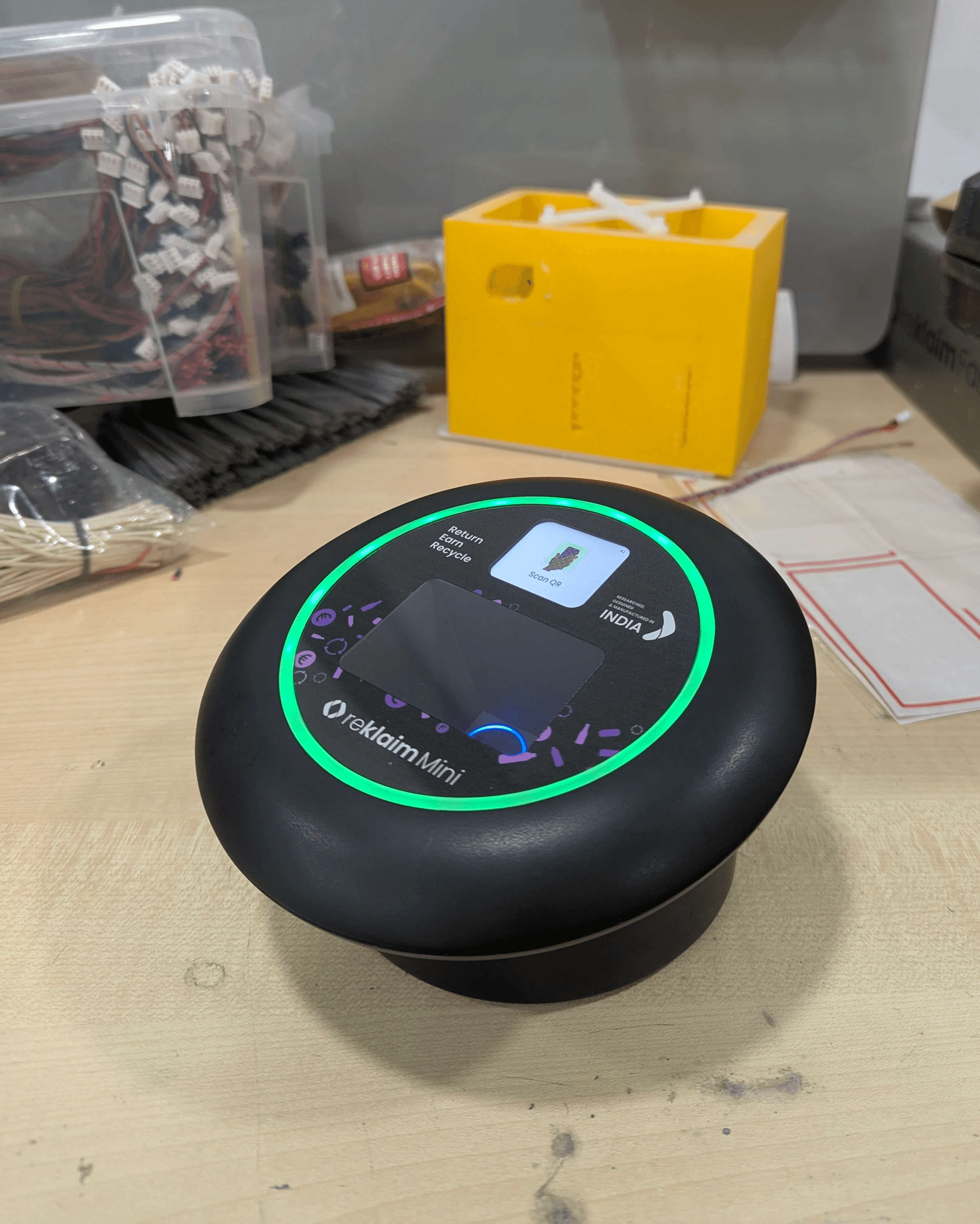
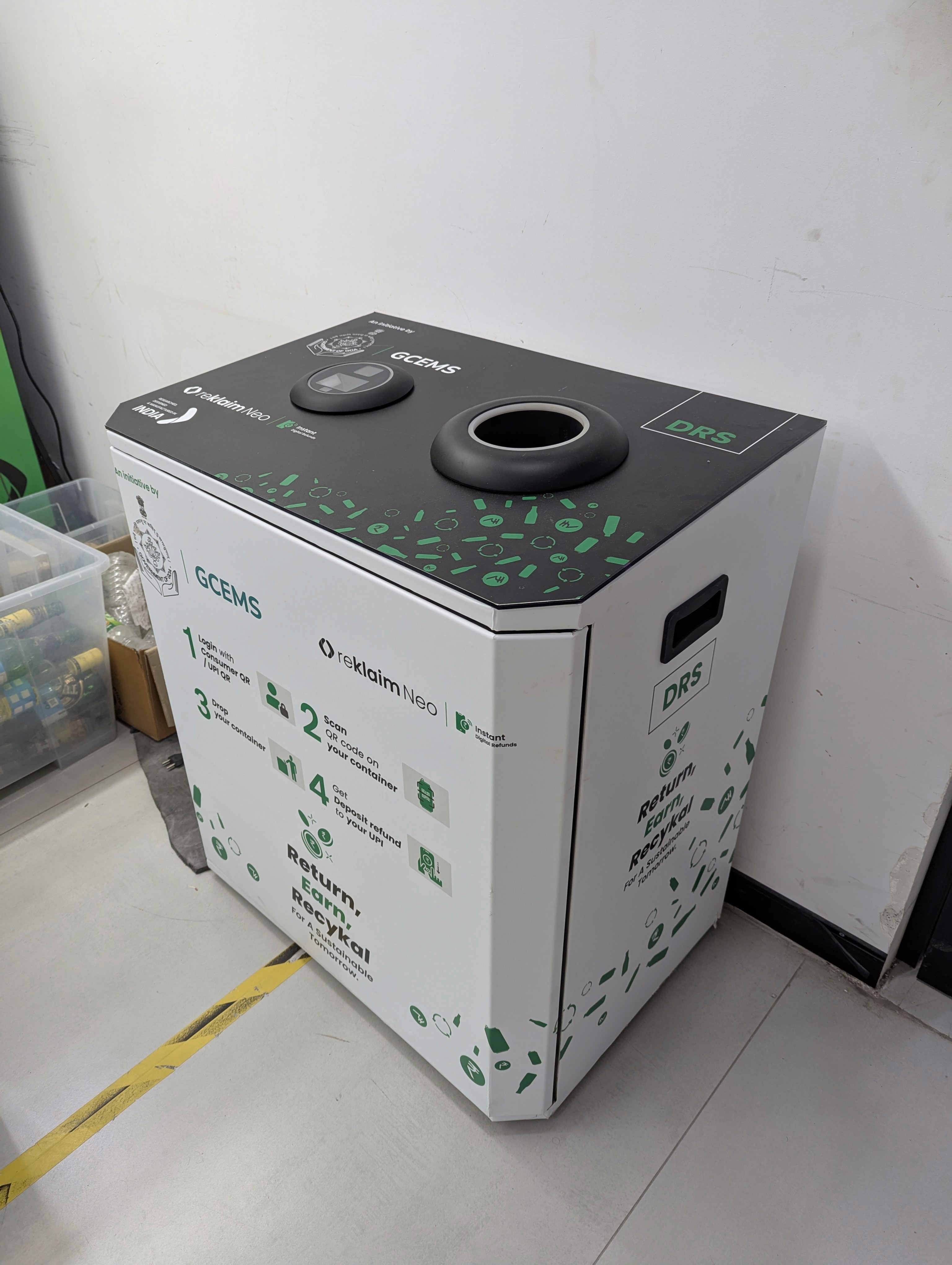
Recycling doesn't always fail because people don't care.
It sometimes fails when systems are hard to operate.
On-Ground Discovery
// Images from the Pilot Project
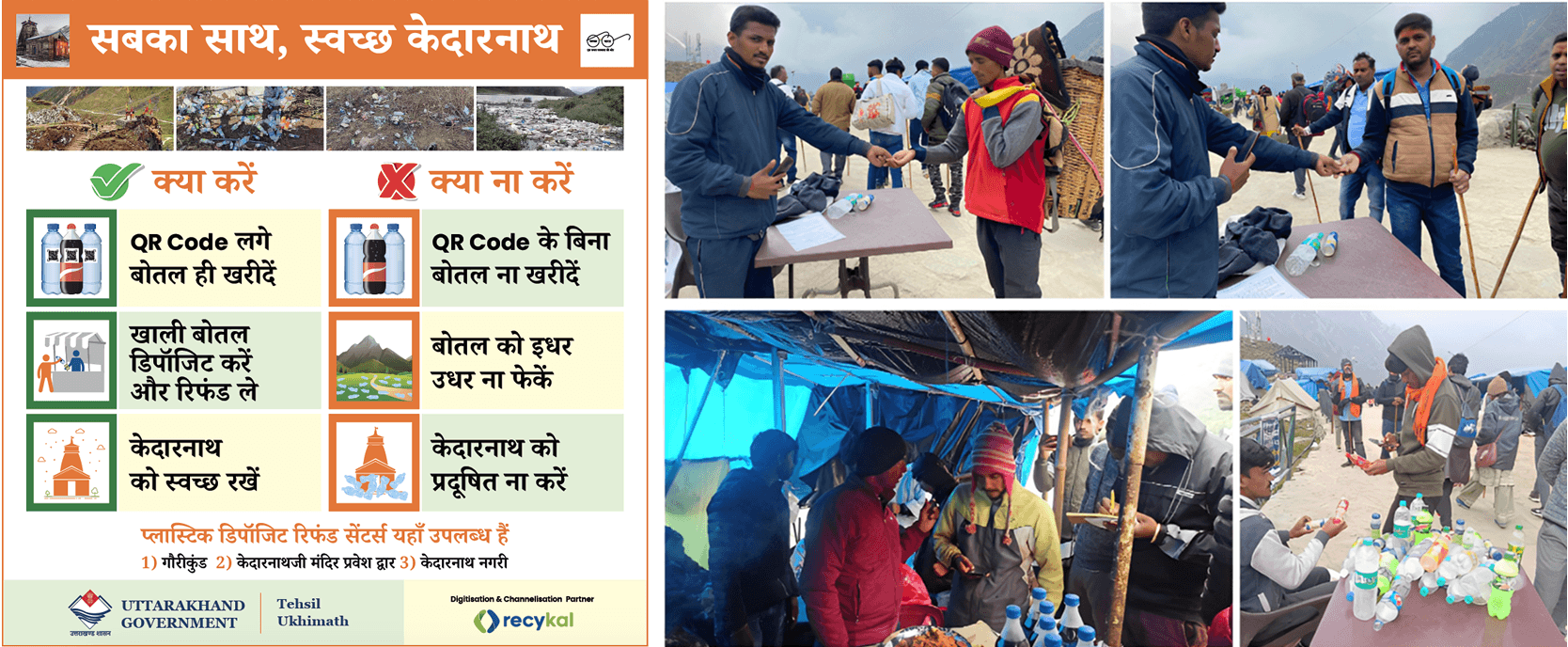
(credits: recykal)
// Real Problems on the Ground
1. Manual Machine Checks
Agents had to physically visit machines just to know their status.
2. No Fill-Level Visibility
No way to know when containers were about to reach capacity.
3. Unclear Earnings
Earnings were tracked manually, leading to confusion and mistrust.
4. Heavy Co-ordination Overhead
Pickup scheduling relied on constant back-and-forth phone calls.
5. Fragmented Tracking
Collections happened, but tracking across stages was disconnected.
6. No Reliable Fallback
Edge cases like downtime had no smooth alternative process.
Key Realization
The system wasn't broken. It was disconnected.
Solution Approach
Instead of solving problems individually,
we designed a unified operational layer for agents
// Design Goals
Manage collections
Allow agents to continue collections even during device failures through a structured manual return process.
Real-Time Device Monitoring
Provide proactive monitoring of device health, capacity, and errors to reduce downtime.
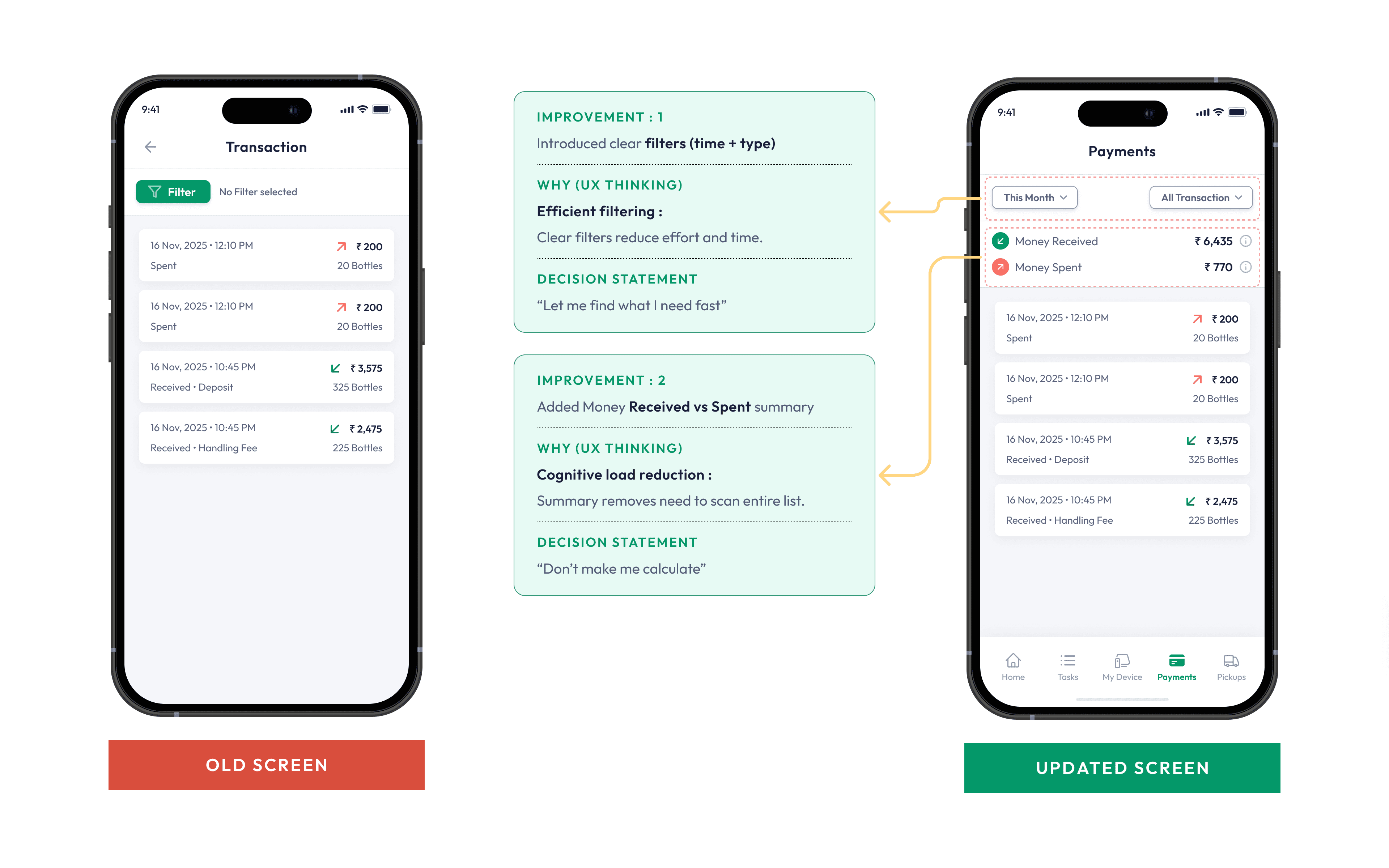
Earnings Transparency
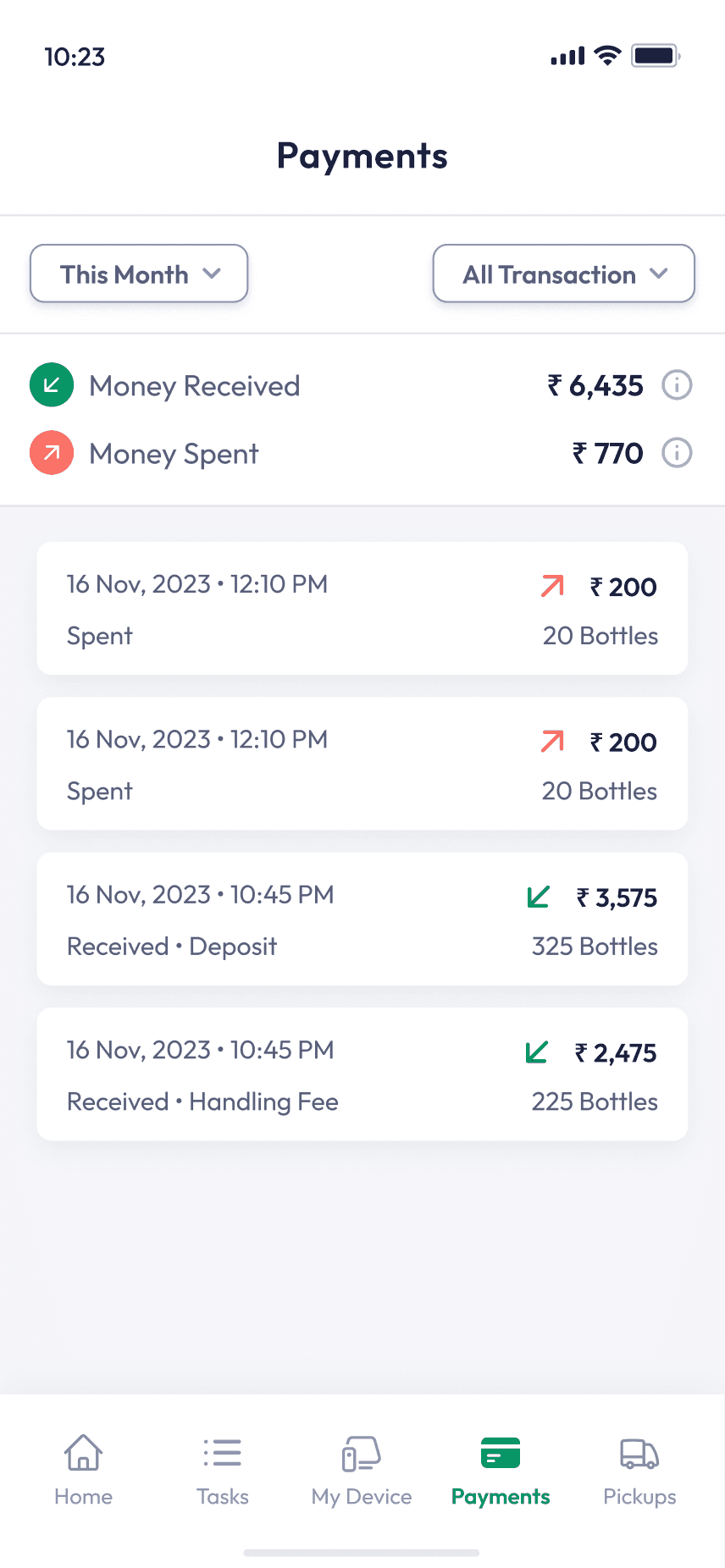
Introduce a real-time handling fee tracker to eliminate confusion around earnings.
Easier Pickup Scheduling
Replace phone-based pickup coordination with a structured scheduling interface.
Design Breakdown & Key Flows
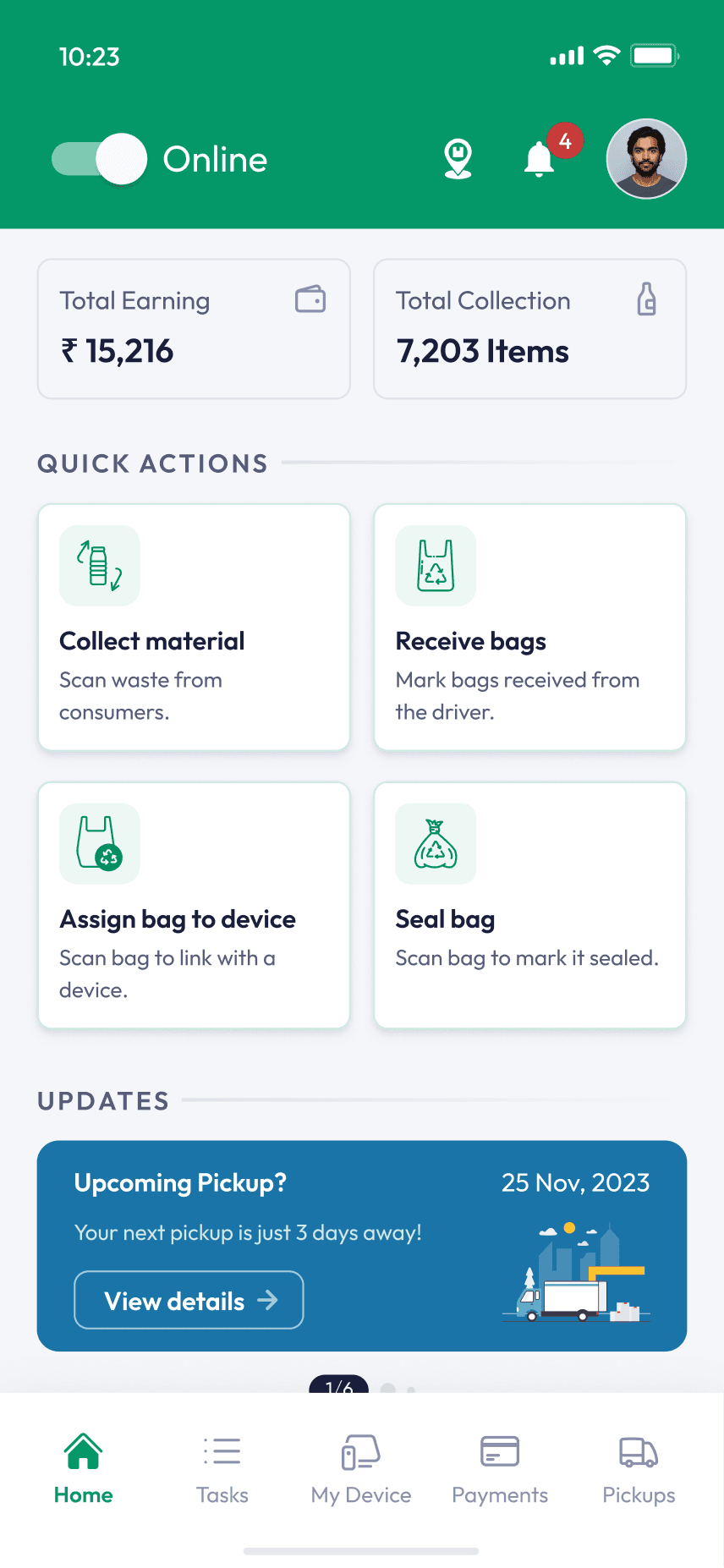
Control Center - Home Screen
Device Monitoring
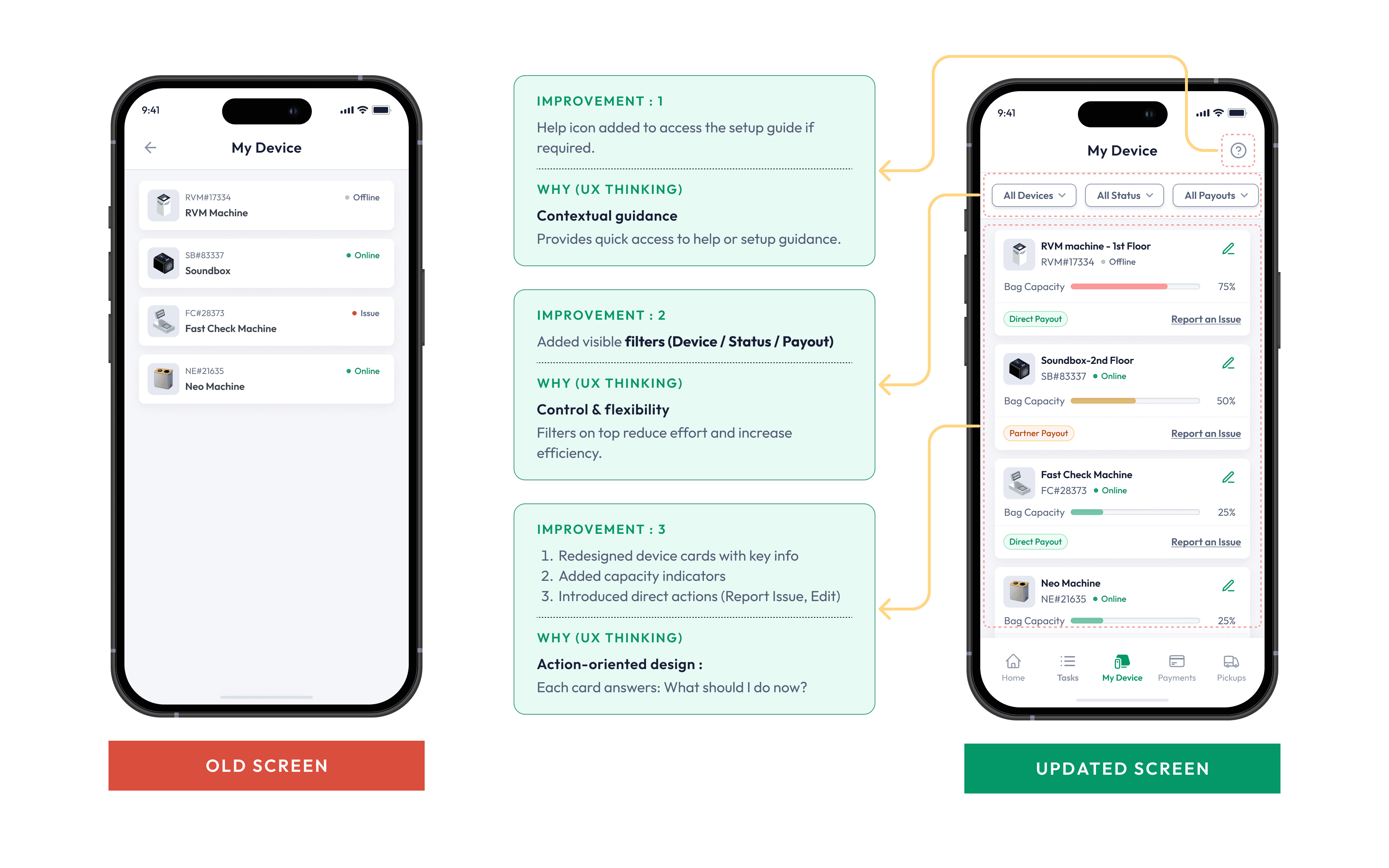
Earning Transparency
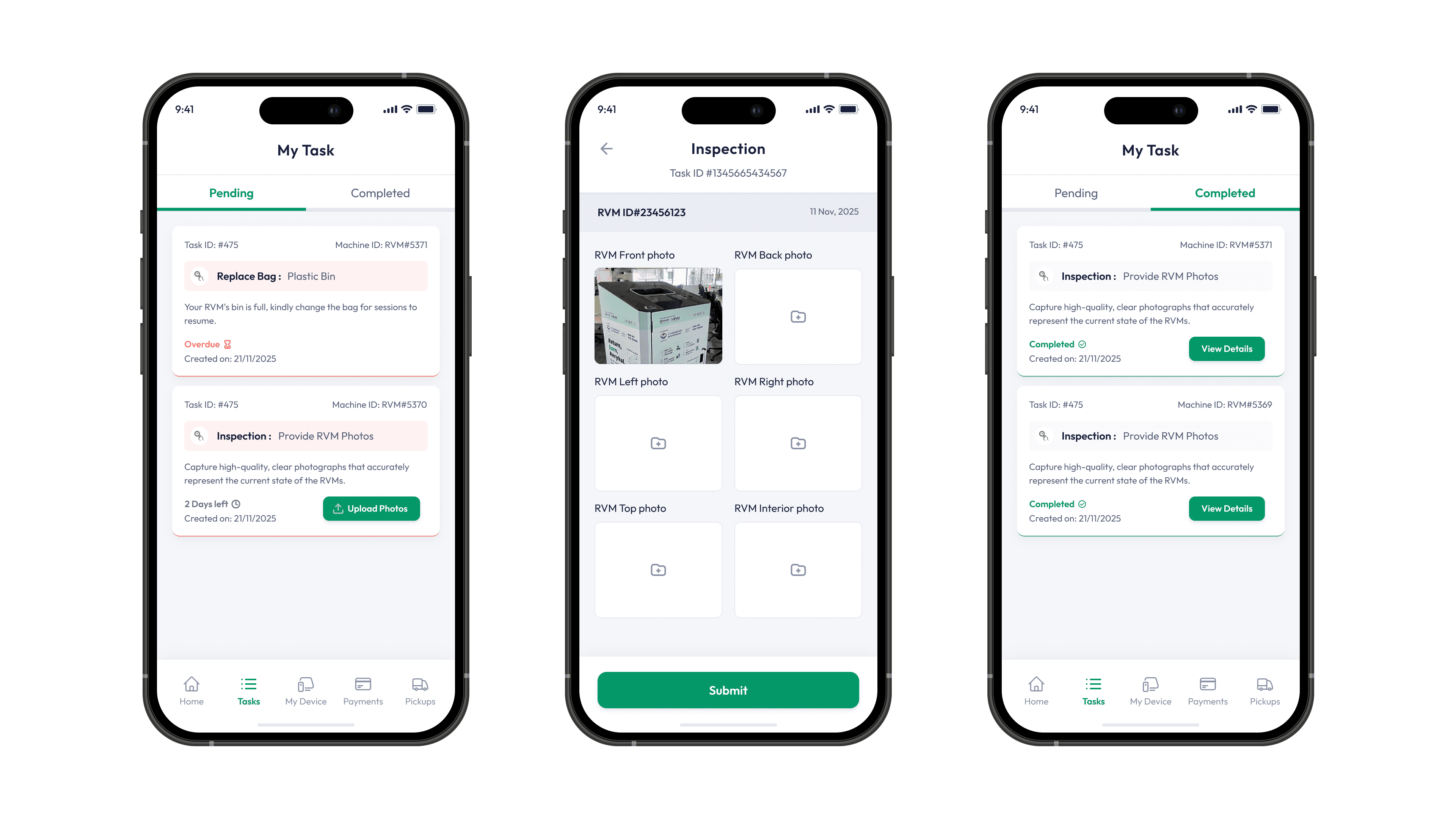
Manage Tasks
Manage Collection (Scan Items)
We didn't just design an app
We made a complex system easier to run.
Testing & Validations
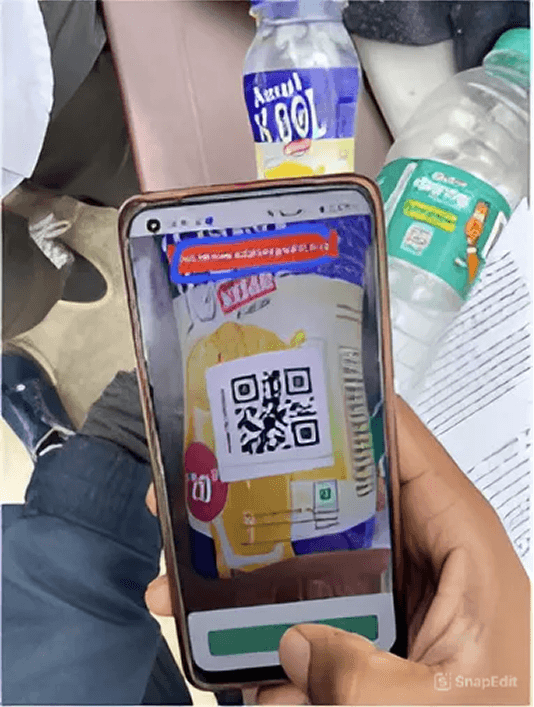
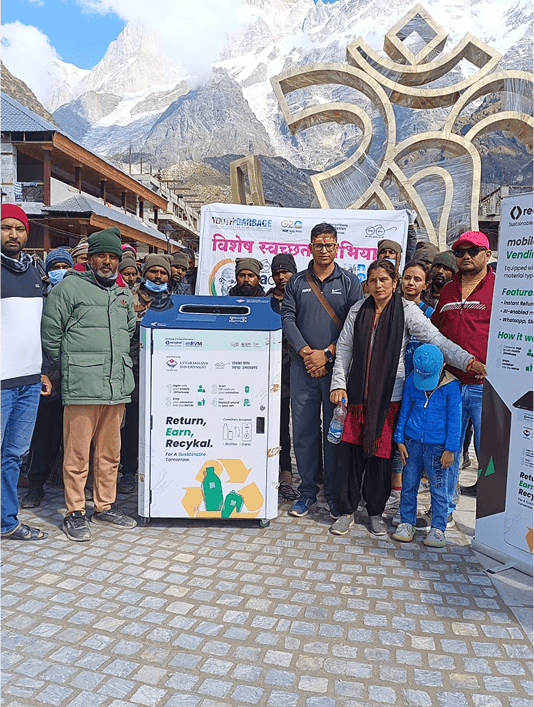
// Images from the user testing
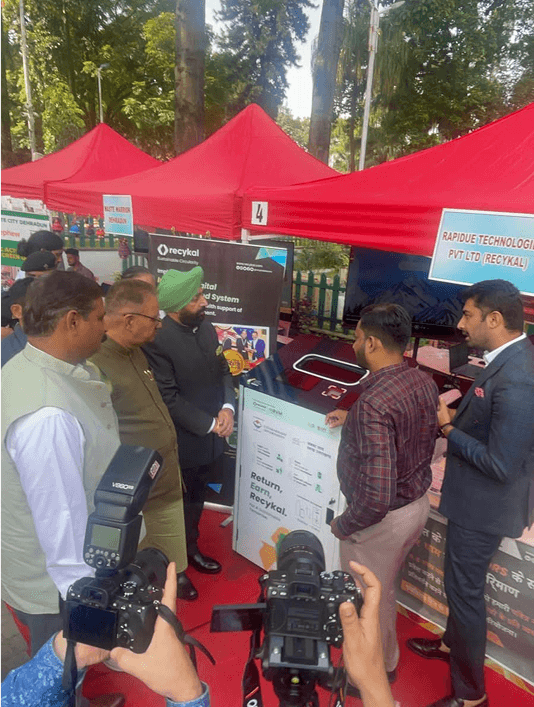
// Testing Method
On-ground Shadowing
Observed agents in real use and spoke with them to understand their challenges and feedback.
Metrics Tracking
Measured time saved, task completion, and satisfaction to evaluate real impact.
The app was battle-tested during the Kedarnath pilot, where collection agents used it daily in challenging mountain terrain. Real-world feedback shaped every iteration, ensuring the tool worked when it mattered most.
// The Deeper Impact
Faster decision making
Real-time visibility eliminated guesswork and delays in field operations
Reduced downtime
Proactive alerts prevented machine failures and collection gaps
Increased trust
Transparent earnings system built confidence among collection partners
Less dependency on calls
Digital coordination reduced constant back-and-forth communication